Follow the recovery journey through the eyes of our conservancy members
It’s barely been 9 months since the veld at Bhungani was reduced to ashes after a massive fire swept through the area, however, the fynbos had been waiting 20 years for this opportunity to regenerate, to resprout, to seed and for bulbs to emerge after a long dormancy with spectacular magnificence. […]
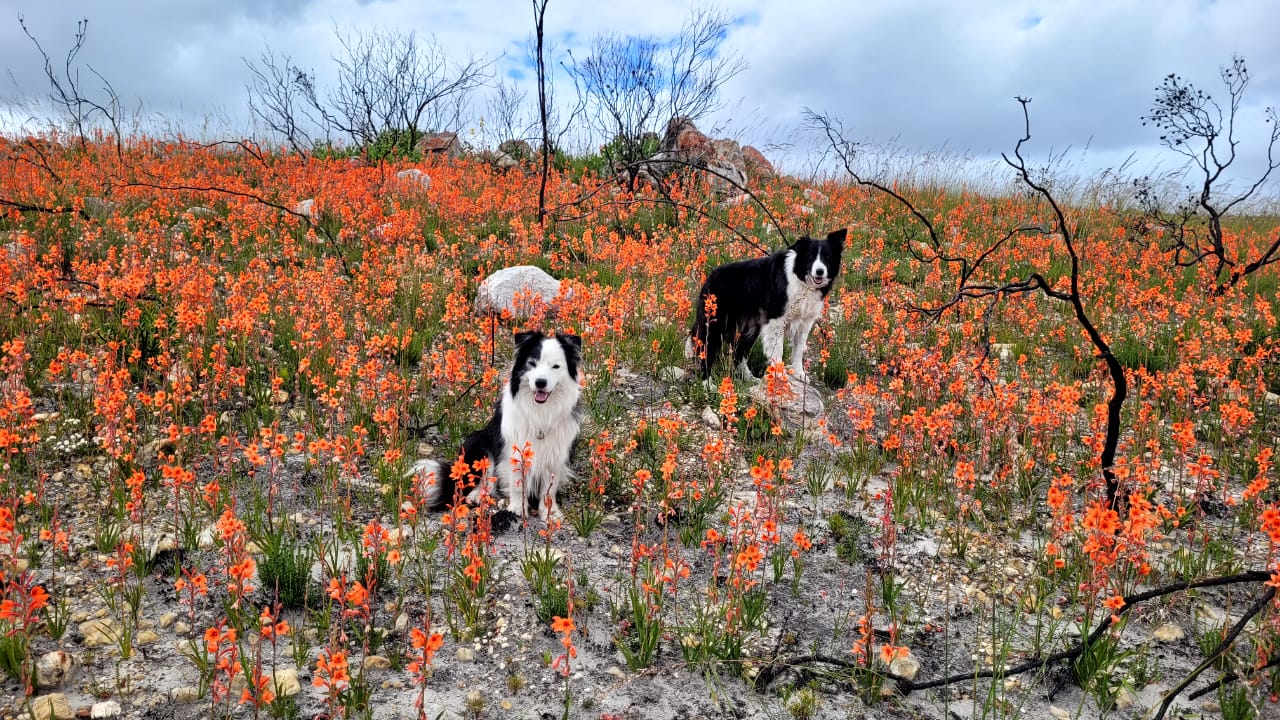
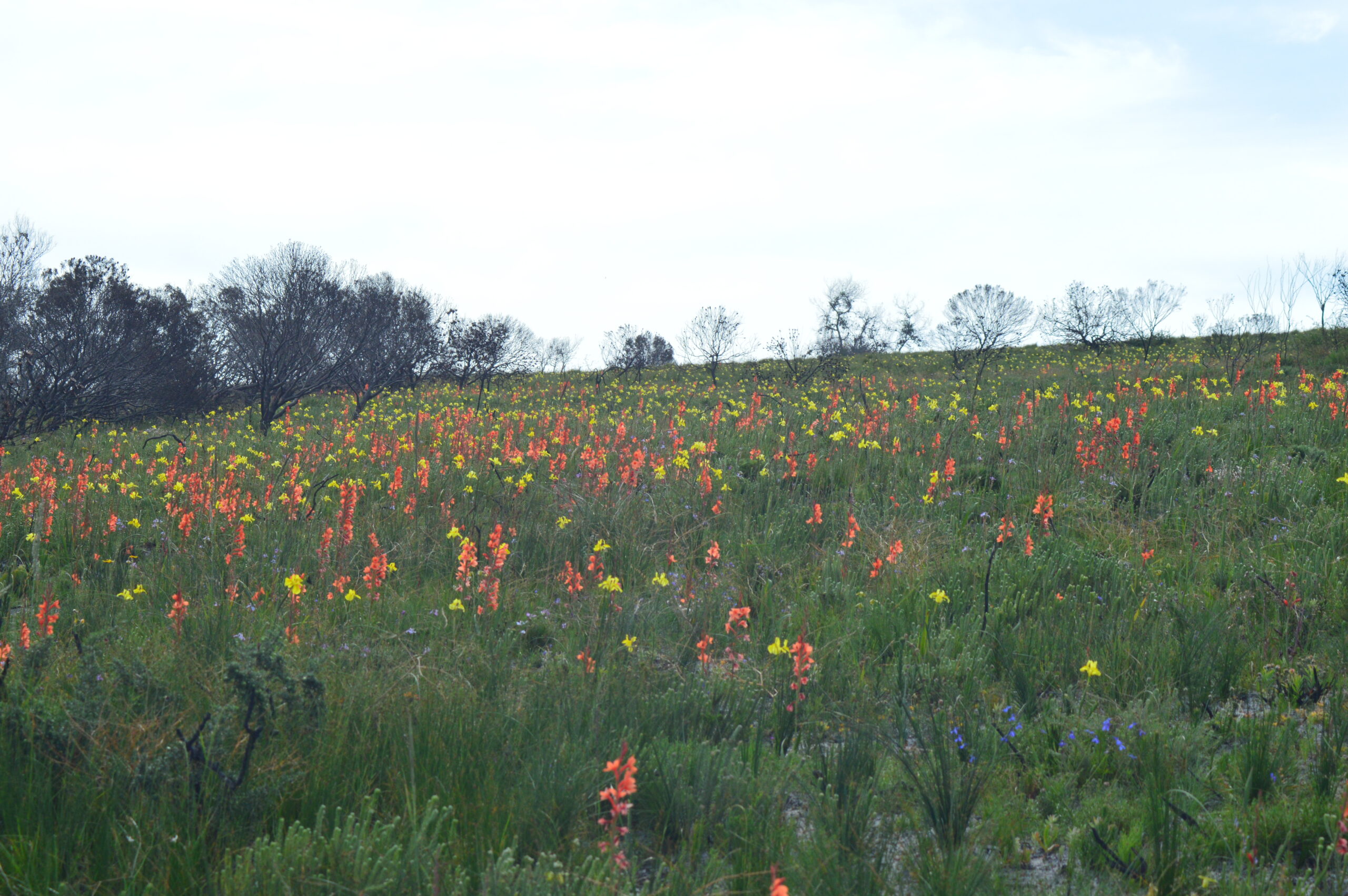
On the slopes of fire-scarred Overberg Sandstone Fynbos, a spectacle emerges. Vast fields glowing with Yellow Irises, and Narrowtube Watsonias, interspersed with Blue Tulps are putting on a grand display. The name of the plant family, Iridaceae, is derived from the Greek goddess Iris, who carried messages from Olympus […]
Persistence is key. That counts for invasive alien clearing too. Commitment to protecting a landscape becomes evident when walking through the veld and seeing the resilience of fynbos. Where clearing of invasive alien vegetation was done a decade ago at a conservation servitude site on Farm 215, with consistent effort to do follow-up […]
Silent battles rage on slopes and in valleys of the Walker Bay area. A race for light, nutrients and space is underway within the ever-changing landscape. This mosaic consists of pristine vegetation, anywhere between 5 and 20 years old, mixed with swathes of young veld undergoing ecological succession after the fires gave the landscape a […]
Where fire raged through six months ago, Roepera flexuosa puts on a wonderful show of yellow flushes across patches of dune strandveld in the Walker Bay area. This plant is known by a few interesting common names: thin twinleaf, maerbossie, spekbossie and vyfpondbos. The origins behind these names are as special as the nature of […]
Many members of the Iris family, Iridaceae, are stimulated to flower after fire. In the last month, three species of Gladiolus have erupted from the ground like fireworks across the burnt landscape, each telling a story of resilience and recovery. The Kaneelpypie, also known as the Fragrant Afrikaner or Rock Afrikaner (Gladiolus guthriei), was the […]
The Royal Horticultural Society’s Chelsea Flower Show is the world’s foremost garden show, featuring a beautiful array of plants and designs from around the world. This year, the award-winning South African team, led by Leon Kluge, presented “Life After Fire” – a garden inspired by the recent, severe wildfires that swept through large areas of […]
A picture paints a thousand words. As part of their efforts to document post-fire recovery of the fynbos landscape, the conservation team on Grootbos Private Nature Reserve selected sites for fixed-point photography and have already witnessed a striking transformation. From bare, sandy soil dusted with ash in mid December, to the first signs of fresh […]
In the recently burnt fynbos, a beautiful Palpares speciosus antlion was spotted among the recovering vegetation. These intricate antlions are usually active at night, their delicate wings catching the light as they flit through mountain fynbos habitats. While the adults are graceful and harmless, their larvae are formidable predators, hiding under sand at the base […]