
Fight for the Light: Fynbos vs Invasive Alien Plants
Silent battles rage on slopes and in valleys of the Walker Bay area. A race for light, nutrients and space is underway within the ever-changing landscape.
This mosaic consists of pristine vegetation, anywhere between 5 and 20 years old, mixed with swathes of young veld undergoing ecological succession after the fires gave the landscape a blank slate. Whether they are resprouters or reseeders, fynbos plants are stimulated to restart life cycles within these open patches that have been on hold for many years.
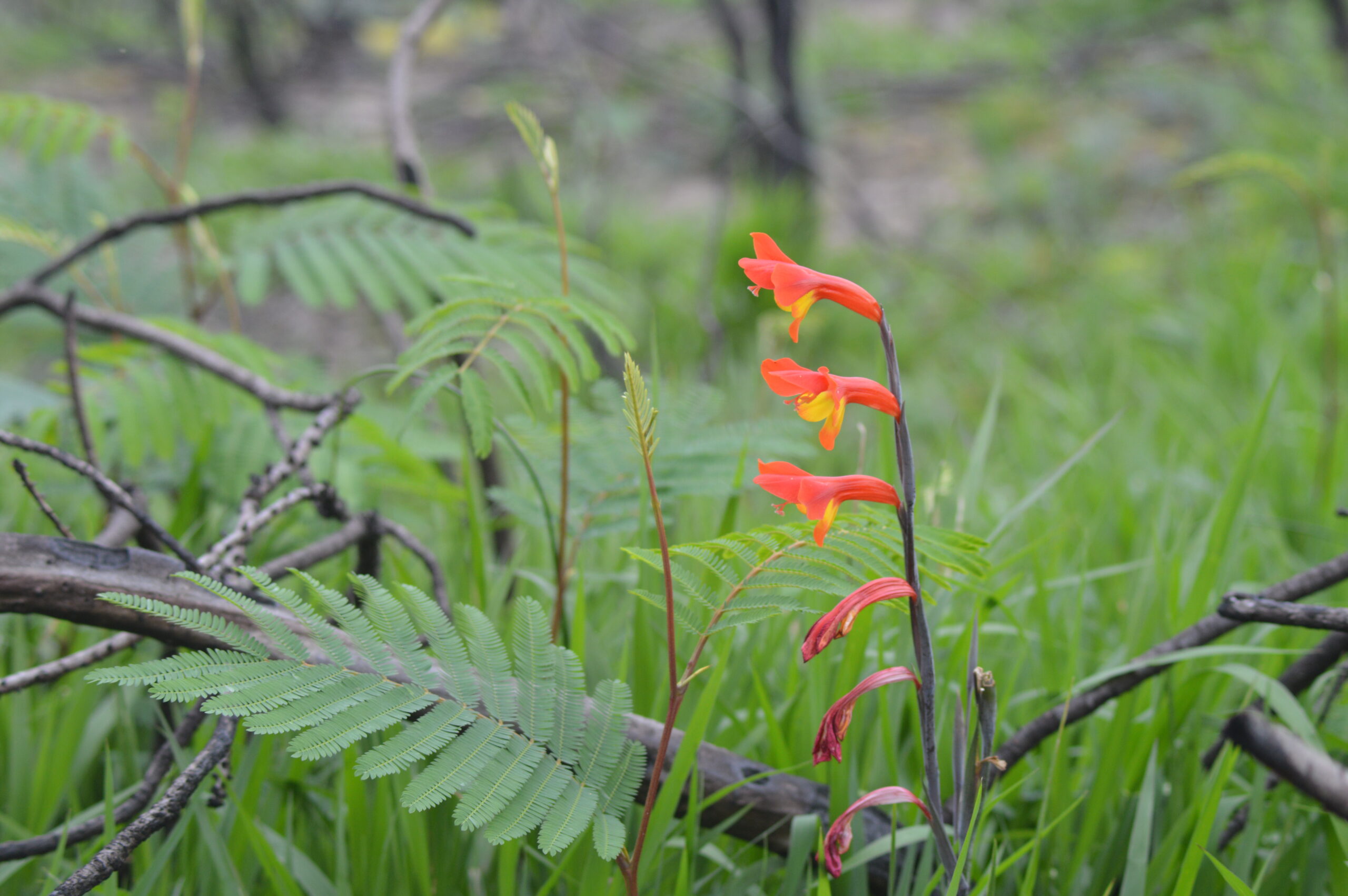
One of the conservancy’s most treasured plants, Gladiolus overbergensis, is in full flower seven months after fires swept through the landscape.
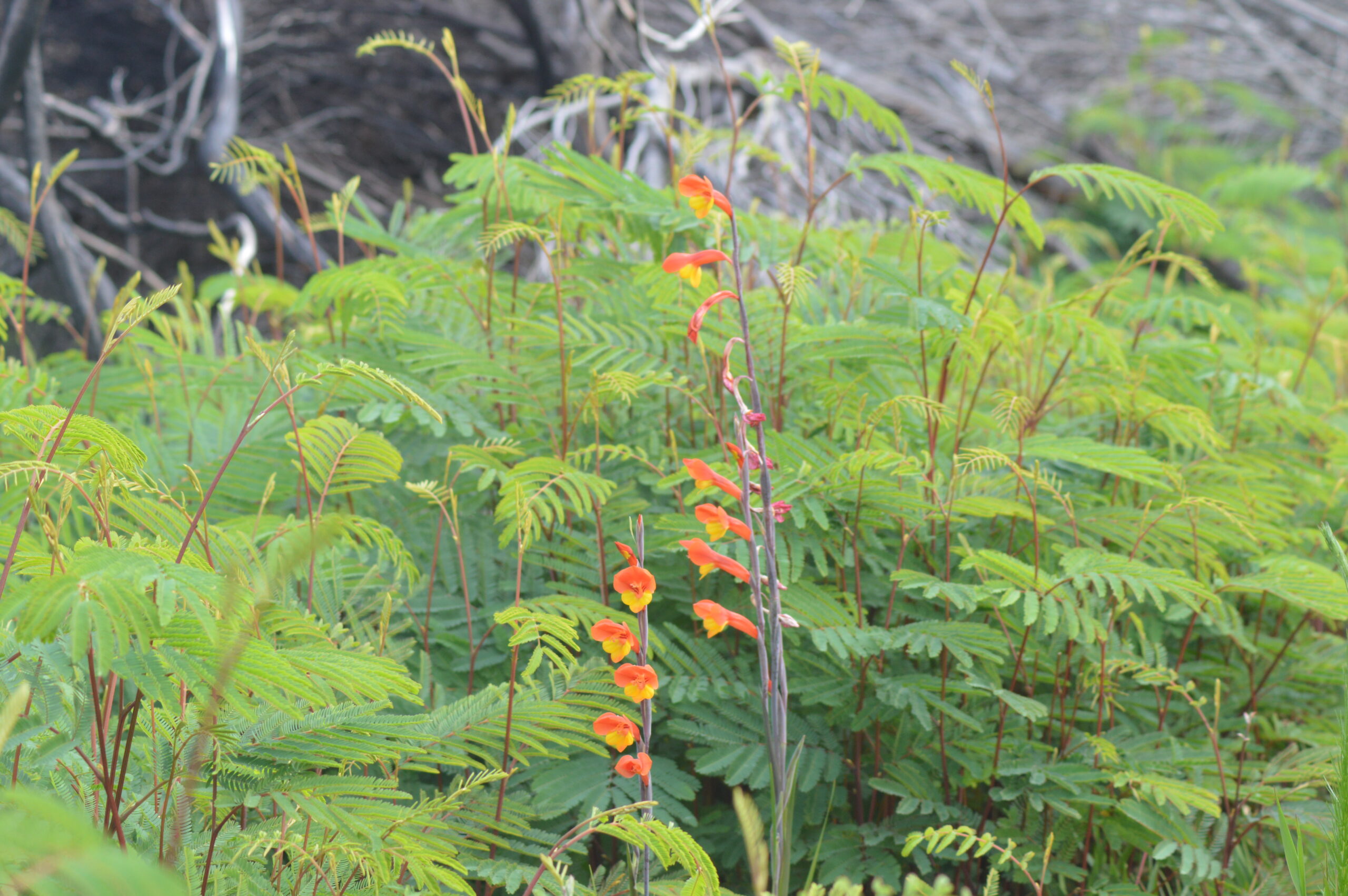
A plant listed as Vulnerable on the IUCN Red List that flowers exclusively after fire, this plant’s greatest threat is the encroachment of invasive alien vegetation on their suitable habitat. More than a decade may pass between flowering events, where many never get to see this plant in all its splendour. Surrounded by a particularly nasty invasive alien plant, Stinkbean (Paraserianthes lophantha), these Gladioli reflect the dire situation facing many fynbos species after the recent fires in the Overberg.
Peppered throughout the landscape are intimidating amounts of invasive alien vegetation, in direct competition with fynbos, as is evident in these Babiana nana being overtaken by Port Jackson (Acacia saligna). A fight that is unbalanced, as invasive alien plants are usually adapted to colonise favourable areas quicker than indigenous fynbos, leaving our native flora at a disadvantage.
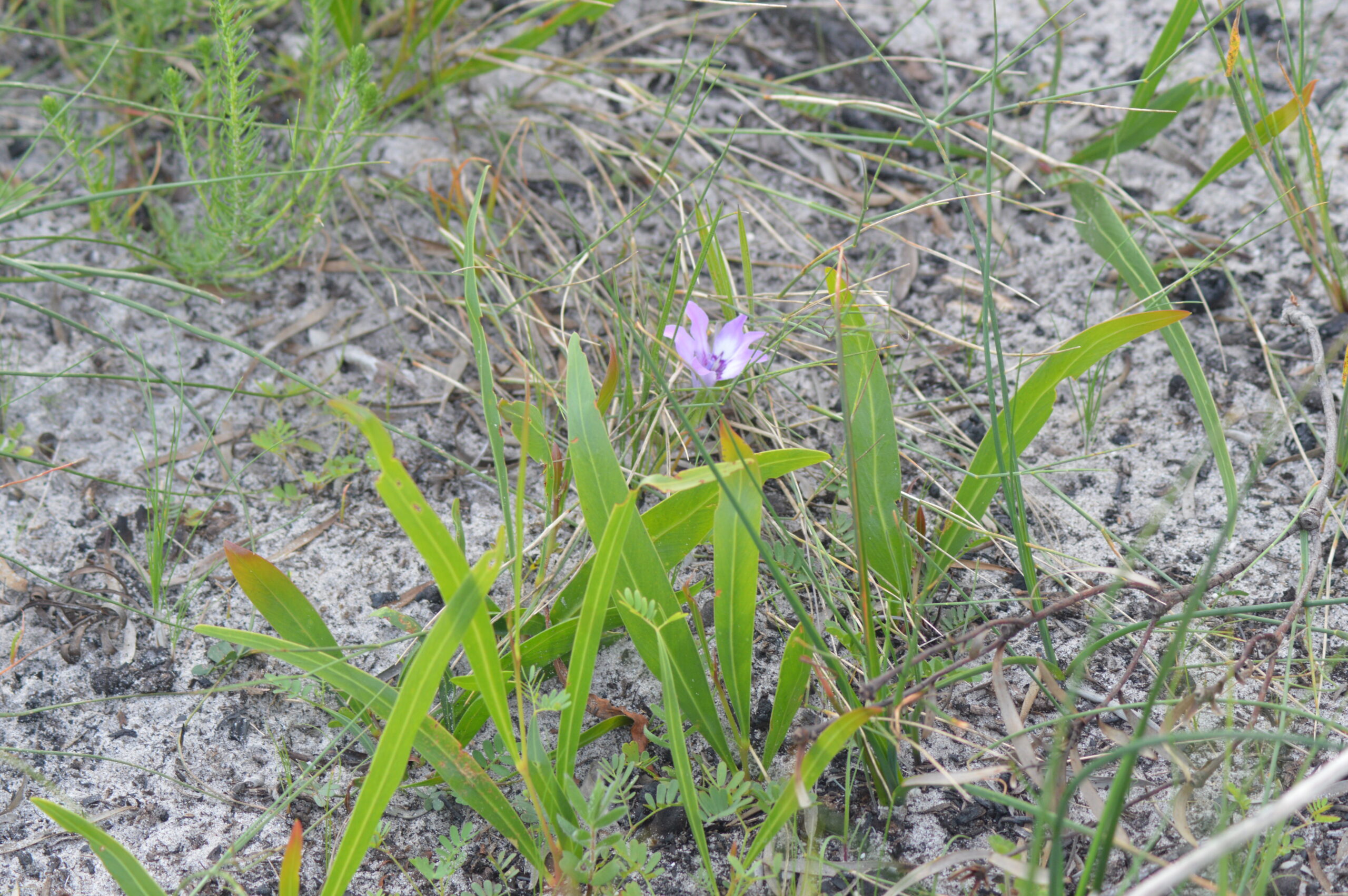
However, the persistence of fynbos in the face of competition with invasive species is a reminder of its resilience. An encouraging indication that, if we act now to remove these competitors, we can even out the odds.
Related Discoveries
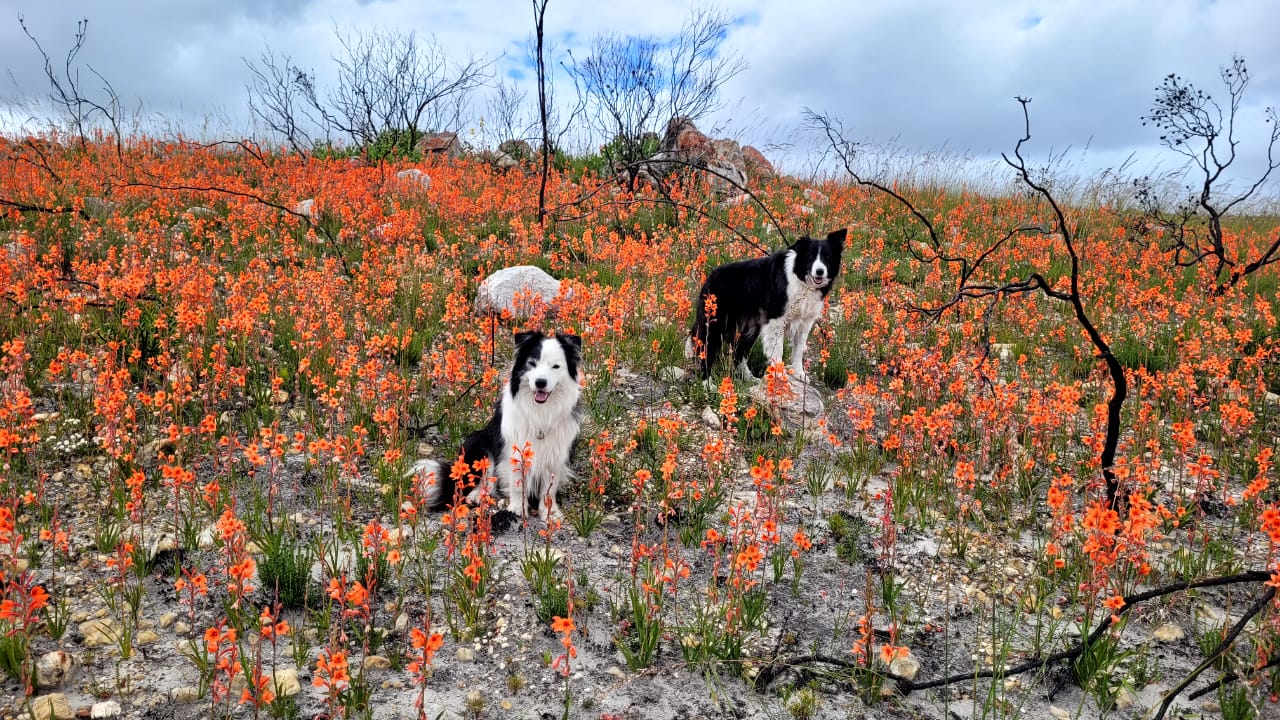
A Weekend Walk at Bhungani
It’s barely been 9 months since the veld at Bhungani was reduced to ashes after a massive fire swept through the area, however, the fynbos had been waiting 20 years for this opportunity to regenerate, to resprout, to seed and for bulbs to emerge after a long dormancy with spectacular magnificence. […]
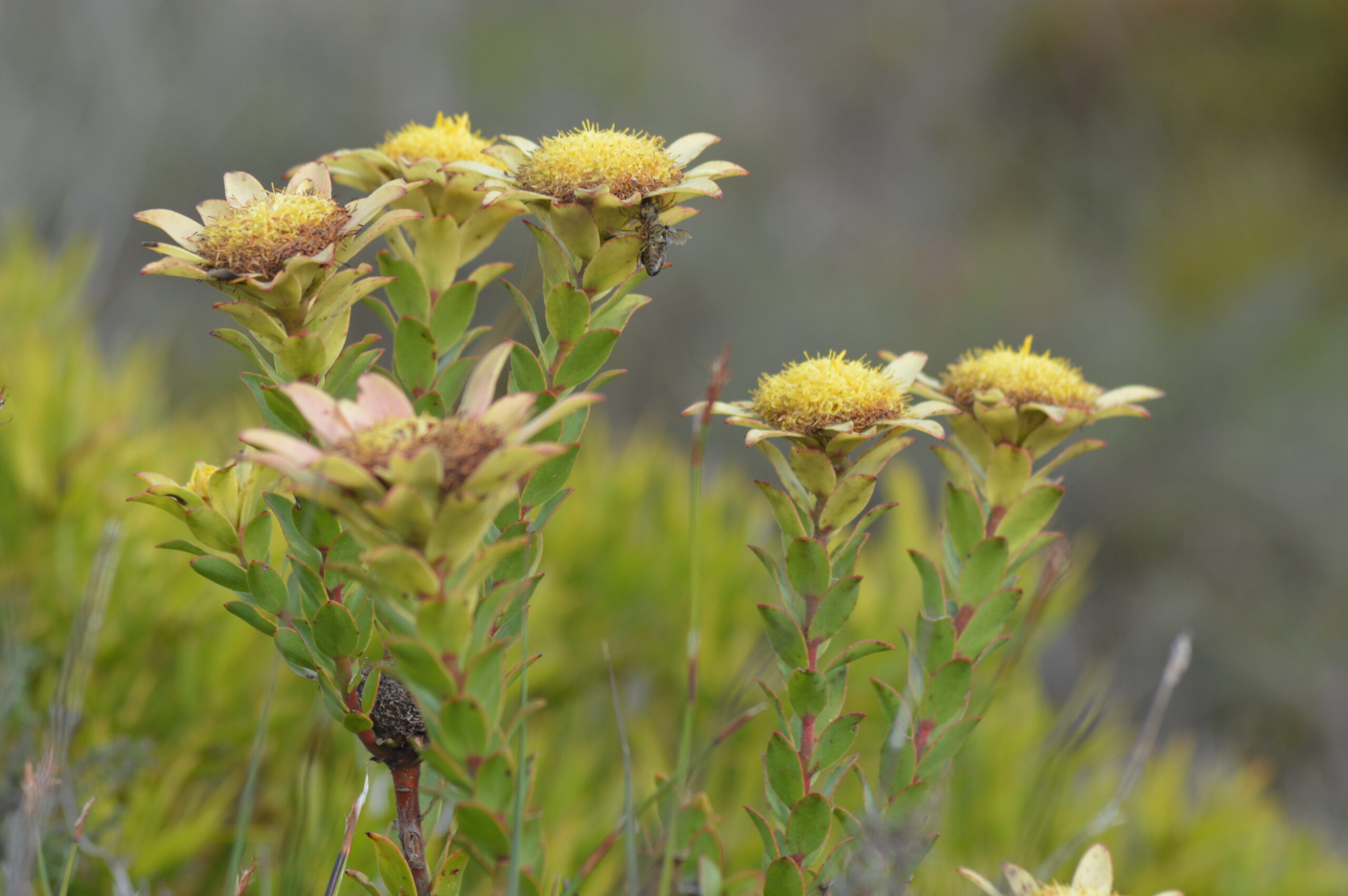
Persistence is key – ask the fynbos.
Persistence is key. That counts for invasive alien clearing too. Commitment to protecting a landscape becomes evident when walking through the veld and seeing the resilience of fynbos. Where clearing of invasive alien vegetation was done a decade ago at a conservation servitude site on Farm 215, with consistent effort to do follow-up […]

Vyfpondbos, thin twinleaf, spekbossie — Roepera flexuosa’s weight related names
Where fire raged through six months ago, Roepera flexuosa puts on a wonderful show of yellow flushes across patches of dune strandveld in the Walker Bay area. This plant is known by a few interesting common names: thin twinleaf, maerbossie, spekbossie and vyfpondbos. The origins behind these names are as special as the nature of […]