
Glad to see you!
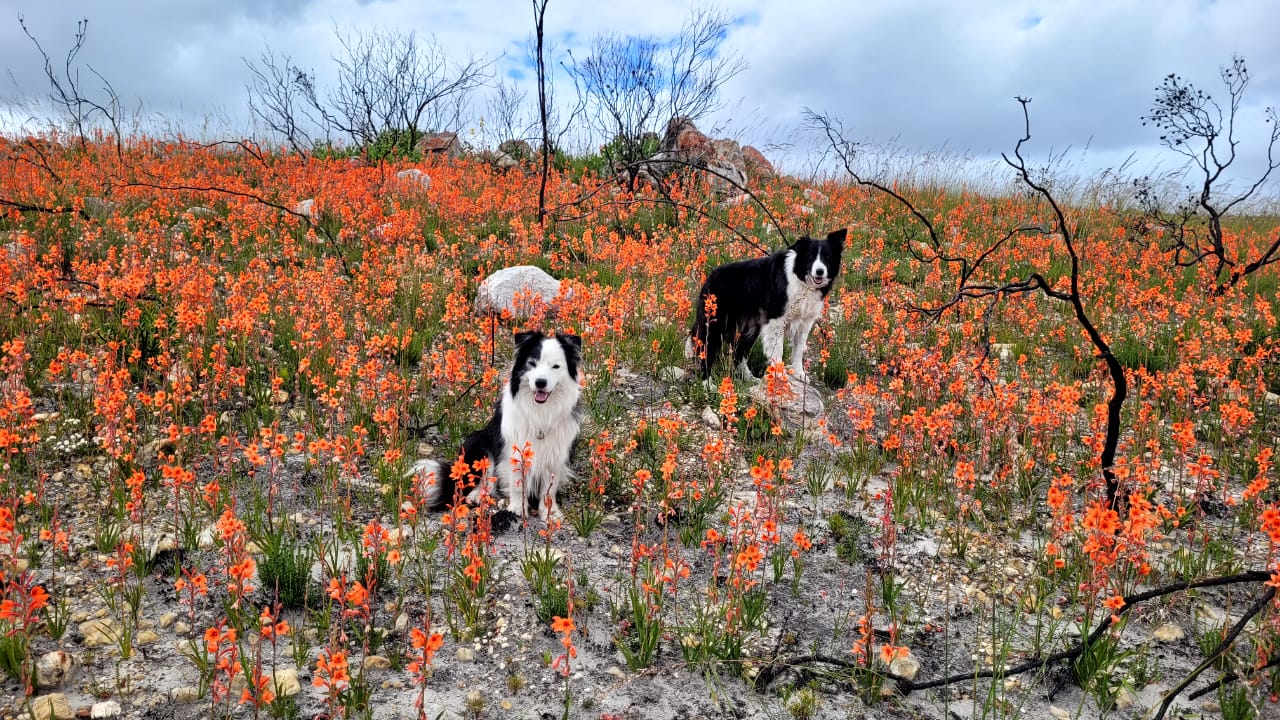
Many members of the Iris family, Iridaceae, are stimulated to flower after fire. In the last month, three species of Gladiolus have erupted from the ground like fireworks across the burnt landscape, each telling a story of resilience and recovery.
The Kaneelpypie, also known as the Fragrant Afrikaner or Rock Afrikaner (Gladiolus guthriei), was the first of this dazzling trio to emerge, filling the air with its enticing scent. While not strictly dependent on fire to flower, this species was previously known from only very few records in the Walker Bay region. Now, several healthy populations have been observed in recently burnt veld between Pearly Beach and Stanford.

The Overberg Pypie (Gladiolus overbergensis) is found nowhere else on Earth except the low sandstone and ferricrete slopes between Stanford and Die Dam. It flowers exclusively after fire, making sightings of this robust and impressive flower a real rarity. Due to its small distribution, it is especially threatened by improper fire regimes and alien invasive plants. As such, it is sadly Red Listed as Vulnerable.

The Scarlet Afrikaner (Gladiolus priorii) is a comparatively widespread species, and is a common sight on the Cape Peninsula. Despite that fact, it had never been recorded in the Walker Bay Fynbos Conservancy until two populations emerged in patches of critically endangered Elim ferricrete fynbos that had been freshly cleared of aliens. It is thought that these plants were stimulated to flower by a combination of fresh sunlight and smoke from the surrounding fires.

Related Discoveries
A Weekend Walk at Bhungani
It’s barely been 9 months since the veld at Bhungani was reduced to ashes after a massive fire swept through the area, however, the fynbos had been waiting 20 years for this opportunity to regenerate, to resprout, to seed and for bulbs to emerge after a long dormancy with spectacular magnificence. […]
Persistence is key – ask the fynbos.
Persistence is key. That counts for invasive alien clearing too. Commitment to protecting a landscape becomes evident when walking through the veld and seeing the resilience of fynbos. Where clearing of invasive alien vegetation was done a decade ago at a conservation servitude site on Farm 215, with consistent effort to do follow-up […]

Fight for the Light: Fynbos vs Invasive Alien Plants
Silent battles rage on slopes and in valleys of the Walker Bay area. A race for light, nutrients and space is underway within the ever-changing landscape. This mosaic consists of pristine vegetation, anywhere between 5 and 20 years old, mixed with swathes of young veld undergoing ecological succession after the fires gave the landscape a […]